


Music streaming has a quiet problem: nobody really knows how much of what they hear was made by a human. Qobuz, the French hi-fi service, is trying to fix that with a simple but significant move — it now tags AI-generated tracks directly inside its app, so listeners can see at a glance whether the song they are streaming was created by artificial intelligence. In an industry drowning in algorithmically produced audio, transparency is quickly becoming a genuine selling point.
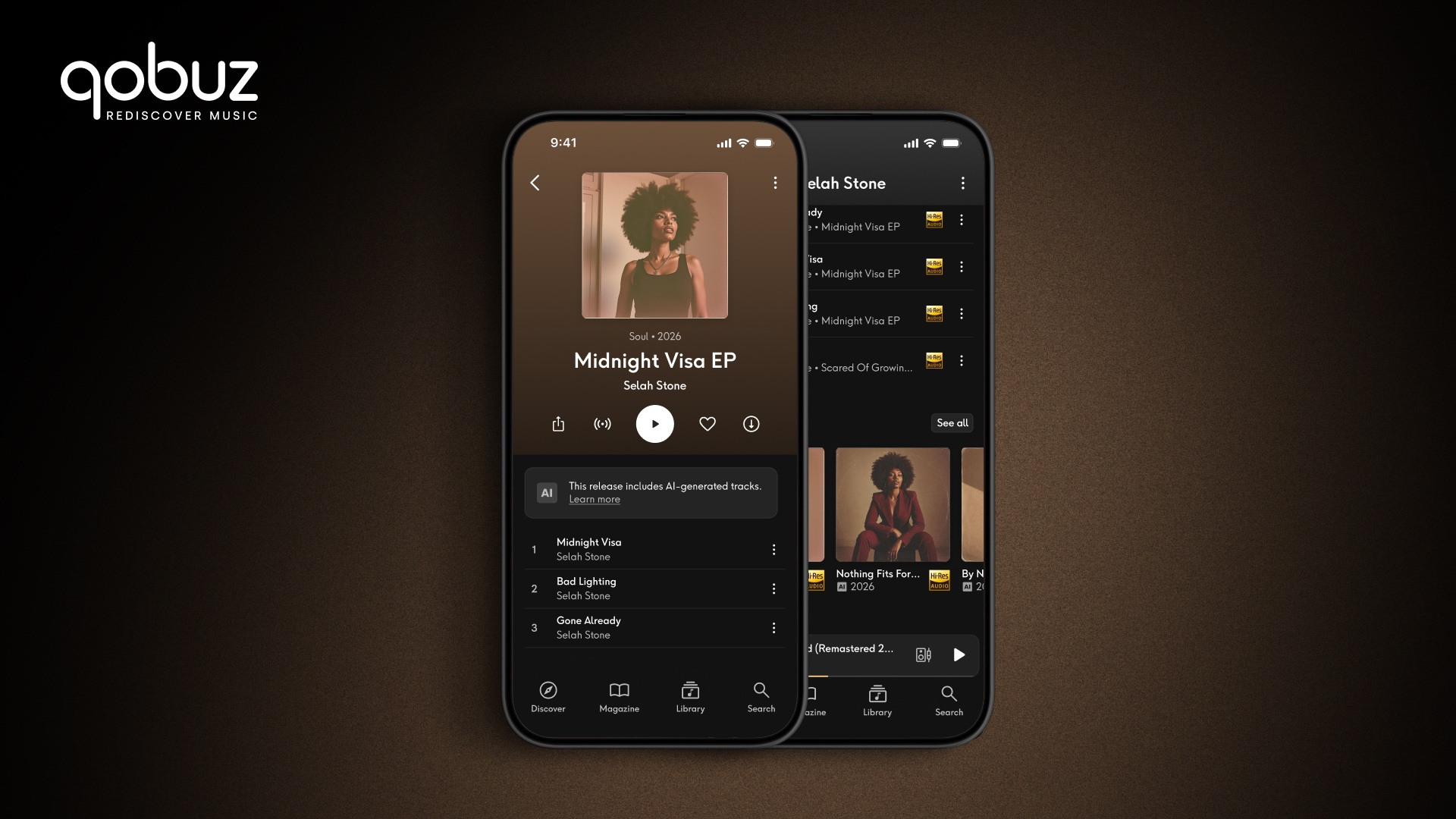
How the Qobuz AI Tag Works
The label appears above the track listing on flagged releases, reading “This release includes AI-generated tracks” and linking to a Learn more page that explains how Qobuz identifies such material. It is a small UI change with a large implication: for the first time, a major platform is putting the AI question in front of the listener rather than burying it in policy documents.
Crucially, the tag mainly covers tracks that surface through search or direct upload. Qobuz’s human editors already keep AI material out of its handpicked playlists and featured selections — a curation model the company has used for years to differentiate itself from algorithm-driven rivals.
Why the Numbers Matter
Qobuz says just 0.38% of its total streams come from identified AI-generated tracks, a figure it credits to human-led discovery rather than recommendation engines. Among the AI-identified streams that do happen, the platform’s anti-fraud systems currently flag 60% as fraudulent and exclude them from royalty payments entirely.
That matters because AI slop can inflate streaming counts and divert royalties away from real artists. Qobuz has already purged more than a third of AI-generated albums with no listening activity, stripping roughly four million tracks from its search engine — a striking measure of how much unlistened AI content had piled up.
A Wider Stand on Fair Pay
The tagging system fits Qobuz’s AI Charter, published in February 2026, and builds on a reputation for fair compensation: the service became the first platform with an independently audited per-stream rate of $0.01873, the highest in the industry. Keeping humans at the centre of creation — and paying them properly — is the through-line of the whole effort.
“The challenge is no longer just detecting AI-generated music but enabling listeners to identify it clearly,” said Deputy CEO Georges Fornay. “Musical discovery must remain guided by human choices.”
What This Means for Listeners
For everyday listeners, the change is low-friction: a label, not a block. You can still play AI tracks if you choose, but you now know what you are hearing. As regulation around AI content develops across the streaming industry, Qobuz’s in-house system may well become the template other platforms are pressured to copy.
Source: TrustedReviews https://www.trustedreviews.com/news/qobuz-is-making-it-clear-which-music-is-ai-produced-on-its-service